
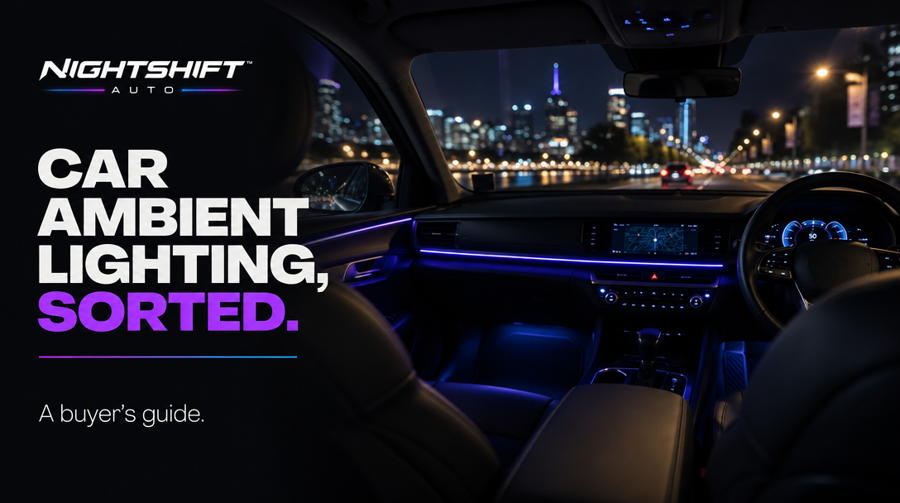
A car ambient lighting kit is one of the few interior mods that changes how a car feels every single time you get in it — without touching the engine, the suspension or your warranty. No exhaust drone. No engineers certificate. Just a cabin that looks like yours instead of like the factory.
But the market is full of kits that flicker, peel off in summer or need half the dash pulled apart to install. Here is what actually matters before you spend money on car ambient lighting in Australia.
What an ambient lighting kit actually does
Ambient lighting runs soft RGB light along the dashboard and door trims so the cabin picks up a colour instead of just the glow of your head unit. Done well, it reads as factory-fit. Done badly, it looks like a school disco with cable ties.
The difference is almost always in three things: how the strips are mounted, how the wiring is hidden, and whether you can control brightness properly. Brightness matters more than colour. A kit that only does full send will reflect in your windscreen at night and annoy you within a week.
What's in a typical kit
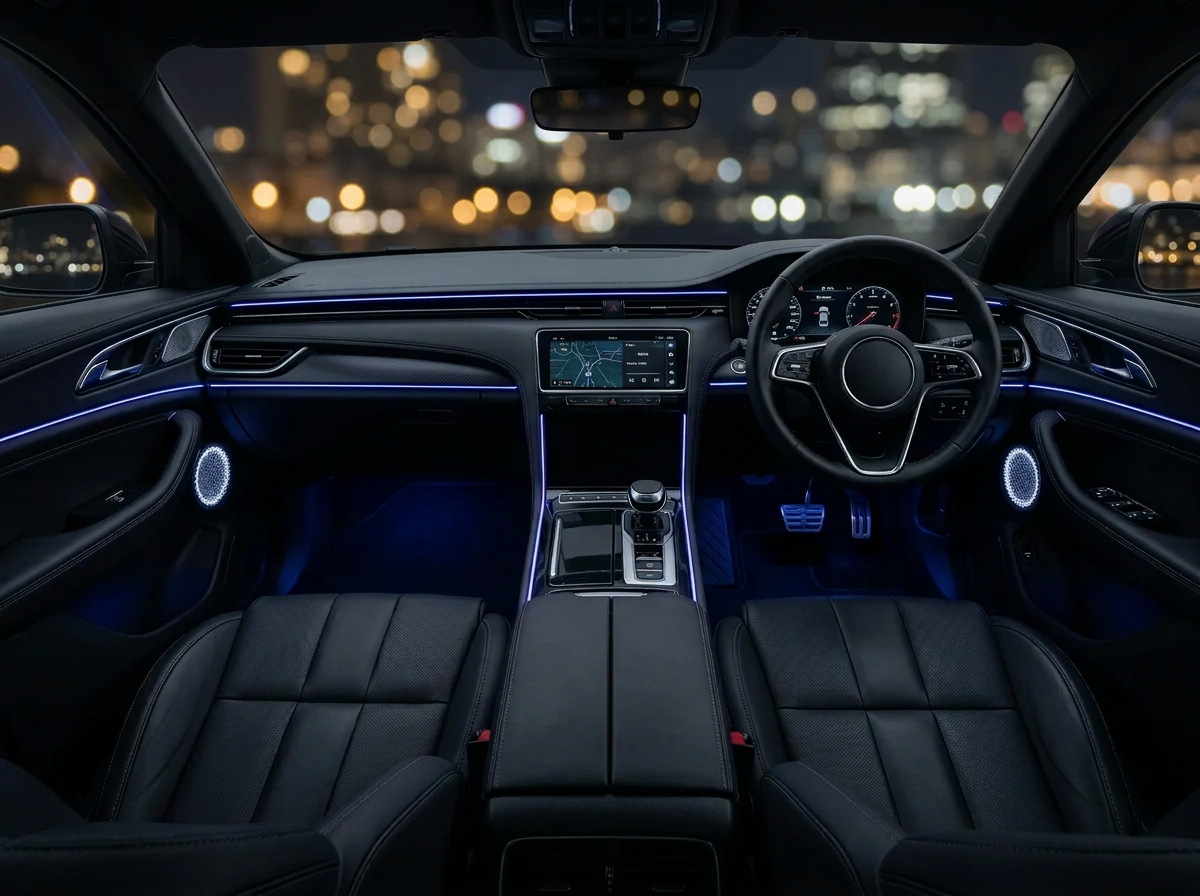
A well-specced starter kit like the NIGHTSHIFT™ AMBIENT covers the main lighting areas of a cabin rather than just the footwells:
- Six LED strips: 90cm ×1, 75cm ×4, 25cm ×1 — sized for the dash and doors
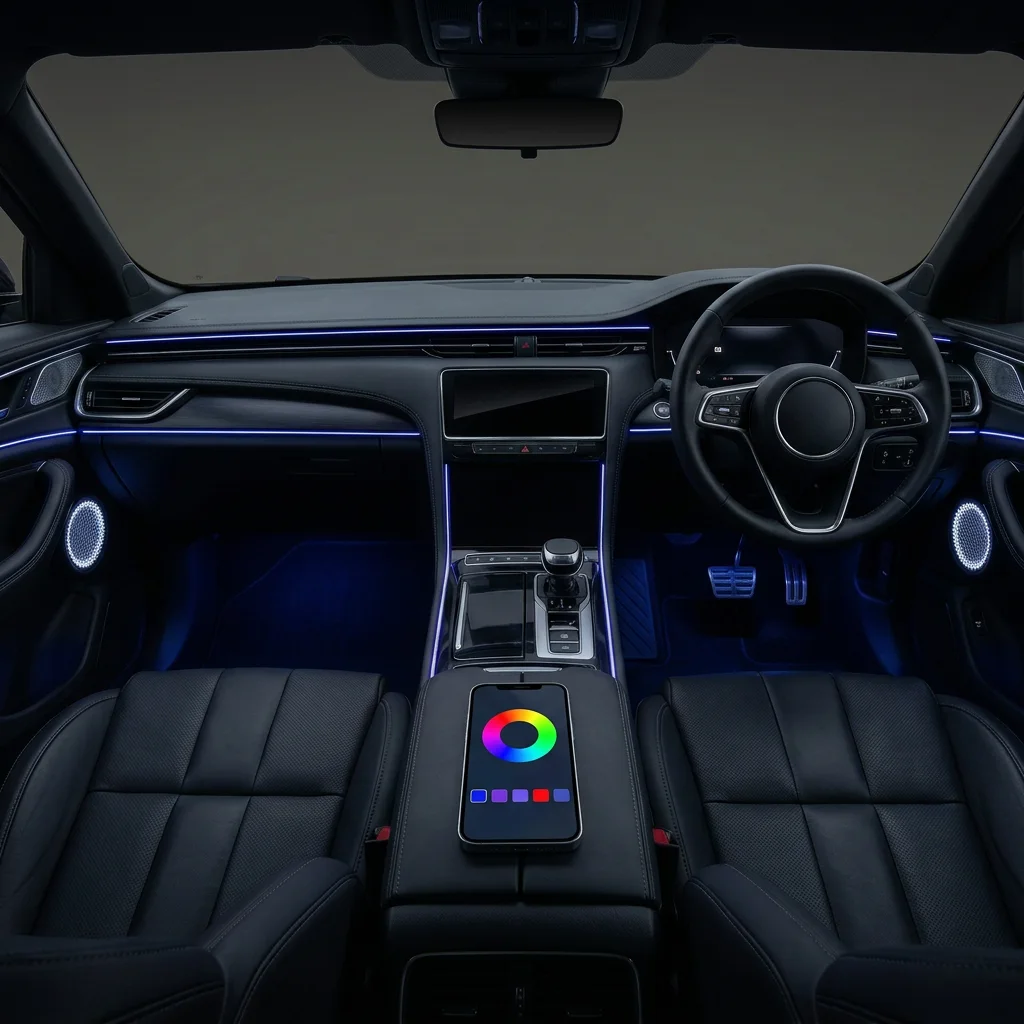
- 64 colour options through app control
- Brightness and lighting modes adjustable from your phone
- A music mode that reacts to sound
- USB power, so there's no hard-wiring into the vehicle's electrical system
The USB power detail is worth understanding. It means the kit draws from a USB port rather than being spliced into your car's wiring, which keeps the install reversible — important if you're leasing, financed, or planning to sell the car and put it back to stock.
Match the light to your build, not to your feed
Most people buy ambient lighting after seeing a purple cabin at 1am on TikTok. That's a good starting point and a bad finishing point. Think about the car:
- Midnight / deep blue suits dark grey, black and silver cars. It reads calm and factory.
- Neon purple and pink is the loudest option and works best when it's the only colour in the cabin. Add more colours and it turns to mush.
- Red is aggressive and looks incredible in track-oriented builds. It also destroys your night vision faster than any other colour.
- Cool white and ice blue is the cleanest look — closest to what a modern premium car runs from factory.
- Deep purple is the late-night cruise setting. Subtle on the doors, heavier in the footwells.
Pick two colours you'll actually live with, not five you'll cycle through once.
Fitting it without making a mess
You don't need to be a auto electrician, but you do need to be patient. A few rules that separate a clean install from a rough one:
- Plan the run before you stick anything down. Lay the strips out along the dash and doors with the power off and check the lengths reach.
- Clean the surface with isopropyl alcohol. Most peeling complaints are installation complaints. Dust and armour-all residue kill adhesive.
- Hide the wiring in trim gaps. Tuck cable behind dash edges and door seals rather than running it across visible panels.
- Never route wiring across an airbag cover or in front of a steering wheel airbag. This is a safety item, not a styling preference.
- Keep light sources out of your eyeline. If you can see the bare LED from the driver's seat, reposition it.
- Test every strip before final mounting. Once the adhesive is down, it's down.
Is it legal in Australia?
Interior ambient lighting is generally treated as a decorative interior item rather than a vehicle modification, but the rules that matter are about distraction and glare. Every state and territory requires you to keep a clear view and full control of the vehicle, and external lighting is tightly regulated.
So keep it interior, keep the brightness low enough that it doesn't reflect in the windscreen, and don't run red or blue lighting that could be confused with emergency vehicle signals when visible from outside. Check your state's road rules and, if you're unsure, your insurer or a local authorised inspection station. Rules and enforcement vary, and this article isn't legal advice.
What to check before you buy
- Strip count and lengths. A kit with one long strip won't cover doors and dash.
- Control method. App control with brightness is the minimum. A remote-only kit is a compromise.
- Power source. USB is reversible; hard-wired is permanent.
- Music mode. Genuinely fun, but confirm it's supported for how you'll use it.
- Shipping and returns. Australian stock means local support and no month-long wait.
- Warranty and support. Ask what happens if a strip dies in month three.
The bottom line
Ambient lighting is the highest-impact, lowest-risk interior upgrade you can make to a daily, a weekend car or a 4WD. Spend your attention on install quality and brightness control, not on how many colours the box claims.
If you want the essential version, start with NIGHTSHIFT™ AMBIENT — 64 colours, six strips, app control and USB power, with free standard shipping Australia-wide and 30-day returns. If you want more lighting areas and a premium finish across the cabin, step up to NIGHTSHIFT™ AMBIENT PRO.


FAQ
Do ambient lighting kits drain my battery?
USB-powered LED strips draw very little, but leaving them running with the ignition off for long periods isn't ideal. Switch them off with the car and you won't have an issue.
Can I install one myself?
Yes. Most kits are adhesive strips and USB power. Allow an hour or two, plan the wiring run, and clean every surface first.
Will it damage my interior?
A USB-powered, adhesive kit is reversible. Remove the strips carefully and clean any residue with isopropyl alcohol.
Do they work in hot Australian summers?
Adhesion is the weak point, not the electronics. Clean surfaces and avoid mounting on heavily curved or textured areas and strips will hold far better.
Can I use one in a 4WD or ute?
Yes. Strip lengths are the limiting factor — check that the dash and door runs in a larger cabin are covered by the six strips included.